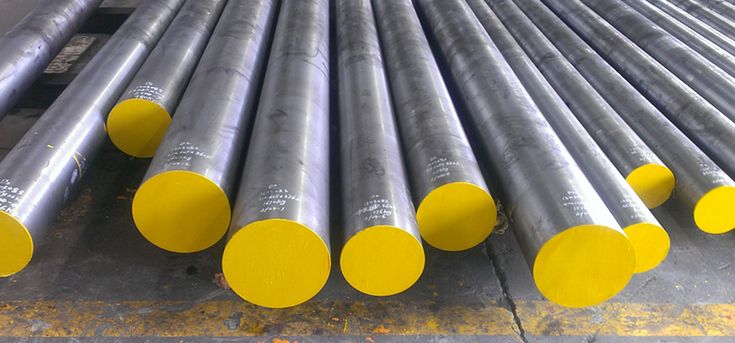
P20 steel is a chromium-molybdenum alloy steel widely used in tooling applications, particularly in plastic injection mold tooling. Known for its excellent machinability, good polishability, and balanced mechanical properties, P20 is typically supplied in the pre-hardened condition (around 280–320 HB or ~30–36 HRC), making it convenient for mold manufacturing without the need for further heat treatment.
Chemical Composition (Typical %)
Element
Content (%)
Carbon (C)
0.28 – 0.40
Chromium (Cr)
1.40 – 2.00
Manganese (Mn)
0.60 – 1.00
Molybdenum (Mo)
0.30 – 0.55
Silicon (Si)
0.20 – 0.80
Nickel (Ni)
~0.3 (varies by grade)
Sulfur (S)
≤ 0.03
Phosphorus (P)
≤ 0.03
Key Mechanical Properties
Property
Value (Typical, Pre-hardened)
Hardness
280–320 HB (30–36 HRC)
Tensile Strength
~1000 MPa
Yield Strength
~800 MPa
Elongation
~20%
Impact Toughness
Good
Machinability
High
Variants
P20: Standard version for plastic mold tooling.
P20+Ni (1.2738): Nickel-modified variant with improved toughness and uniform hardness through larger cross-sections.
P20 HH (High Hardness): Higher hardness (~38–42 HRC) version for increased wear resistance.
Heat Treatment
Supplied Condition: Pre-hardened
Can be Hardened: Up to ~50 HRC with proper quenching and tempering.
Annealing: 710–740°C, followed by slow furnace cooling.
Tempering: Generally not required unless further hardening is applied.
Polishability: Excellent – suitable for high-gloss finishes in plastic molds.
Corrosion Resistance
Moderate corrosion resistance, can be improved by surface treatments (e.g., nitriding, chrome plating). For corrosive environments, stainless mold steels (like 420SS) are preferred.
Industrial Applications
1. Plastic Injection Molds
Core and cavity components
Mold bases
Compression molds
2. Die Casting Dies
Low-pressure zinc die casting
Die holders and structural supports
3. Tooling Components
Jigs and fixtures
Support plates
Clamping elements
4. Prototyping and Pre-Series Tools
Quick-turn molds for short runs
Prototype die sets for testing
Why Choose P20 Steel?
Advantage
Description
Cost-effective
Lower cost compared to fully hardened tool steels
Easy to machine
Reduces production time and tooling cost
Good toughness
Withstands mold pressures without cracking
Pre-hardened delivery
Eliminates the need for hardening in many cases
Surface treatable
Supports nitriding or hard chrome for enhanced wear/corrosion resistance
Limitations
Not ideal for abrasive plastics (glass-filled polymers) – may wear quickly.
Not corrosion resistant enough for humid or chemical-rich environments.
Cannot match the wear resistance of higher alloy steels like H13 or S7.
Alternatives & Comparisons
Steel
Key Benefit over P20
H13
Better heat resistance & wear resistance
S7
Superior shock resistance
420 Stainless
Higher corrosion resistance
1.2311
Similar to P20 but with better uniformity in large molds
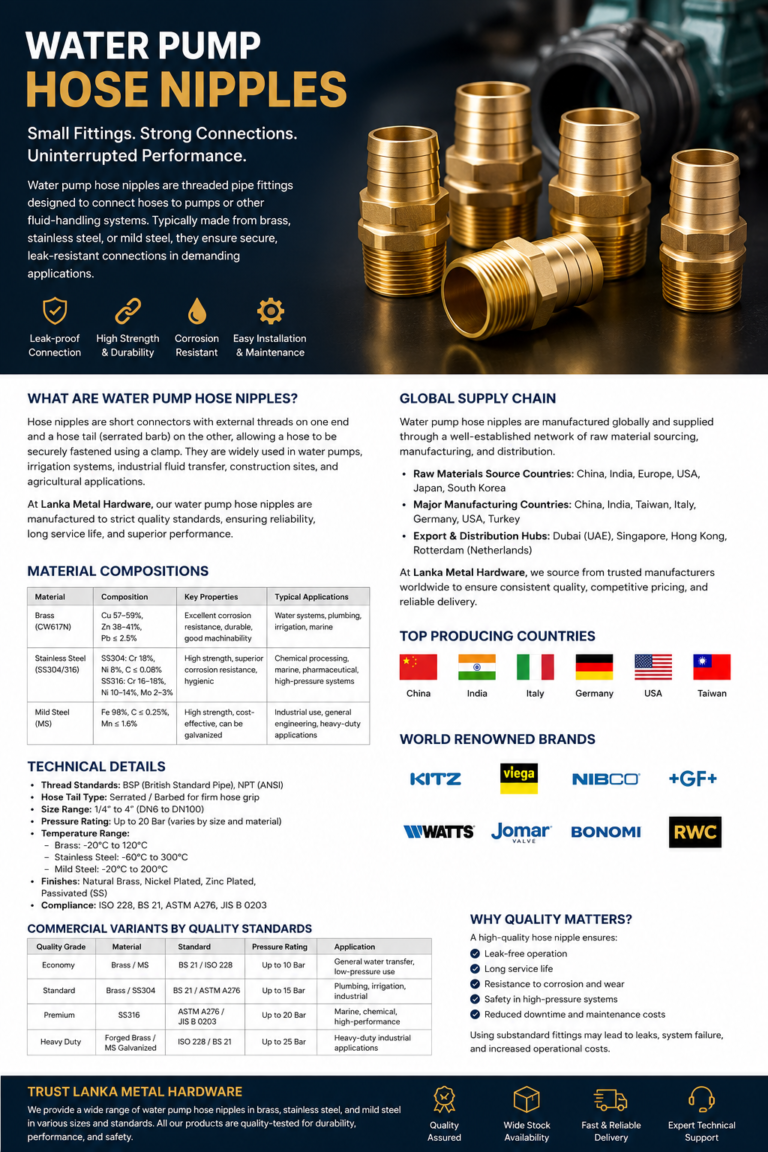
Water Pump Hose Nipples: Reliable Connections for Pumps, Plumbing and Fluid Transfer Water pump hose nipples are compact but essential threaded fittings used to connect flexible hoses to water pumps, pipes, valves and other fluid-handling equipment. A typical hose nipple combines a male threaded connection on one side with a barbed or serrated hose tail…
1. Introduction EN-19 is a high-quality alloy steel grade predominantly known for its excellent mechanical properties. It belongs to the class of medium carbon, low alloy steel and is commonly referred to by its AISI designation 4140. With its combination of strength, toughness, and wear resistance, EN-19 is widely used in engineering applications where durability…
1. Introduction EN8 carbon steel is an unalloyed medium carbon steel grade with good tensile strength. It is commonly used in applications that require higher strength than mild steel but do not necessitate the hardness or strength of alloy steels. EN8 is typically supplied in the untreated or normalized condition and can be heat treated…
Overview Sri Lanka’s raw metal industry is a vital component of its light engineering and manufacturing sectors. The country is known for its foundry industry, which has roots tracing back to the second century BC. Modern developments have led to the establishment of various foundries specializing in the production of base metal products such as…

Insightful Article.