
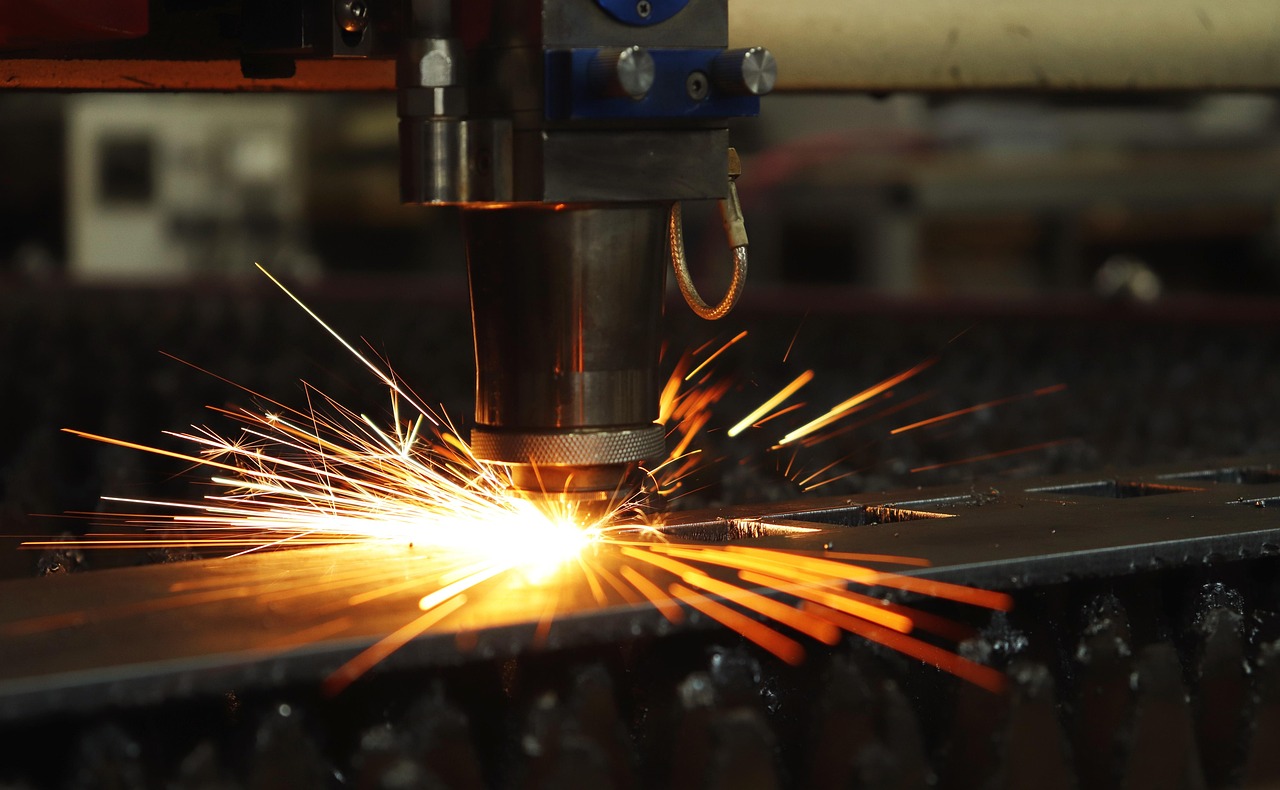
Welding Technology: Welding Rods, Materials, Applications, Standards and the Evolution of Arc Welding
Welding is one of the most important joining technologies in modern manufacturing, construction, maintenance and engineering. From structural steel fabrication and pressure vessels to automotive components, pipelines, shipbuilding, mould repair and heavy machinery, welding enables metals to be permanently joined by creating a metallurgical bond.
Modern welding technology has developed far beyond the traditional concept of simply melting two pieces of metal together. Today, successful welding depends on base-metal chemistry, filler-metal selection, welding process, heat input, shielding, joint preparation, preheating, post-weld heat treatment and applicable standards.
One of the most important decisions is the selection of the correct welding rod or electrode. A welding consumable must be compatible with the parent material and the required mechanical and service properties of the finished weld.
1. What Is Welding Technology?
Welding is a manufacturing process used to join two or more materials, normally metals, by applying heat, pressure, or a combination of both. In fusion welding, the base material is locally melted and allowed to solidify, often with additional filler metal.
In arc welding, an electric arc is established between an electrode and the workpiece. The arc generates sufficient heat to melt the electrode and/or base material. The molten metal then solidifies to form the weld.
Common arc-welding processes include:
- Shielded Metal Arc Welding (SMAW/MMA)
- Gas Metal Arc Welding (GMAW/MIG/MAG)
- Gas Tungsten Arc Welding (GTAW/TIG)
- Flux-Cored Arc Welding (FCAW)
- Submerged Arc Welding (SAW)
- Plasma Arc Welding (PAW)
The choice depends on material, thickness, production volume, accessibility, required weld quality and working environment.
2. A Short History of Welding Technology
The concept of joining metals is thousands of years old. Ancient blacksmiths used forge welding, where heated metal pieces were hammered together to create a solid-state joint.
The industrial revolution introduced new methods of joining metals. During the nineteenth century, electrical technology made it possible to use an electric arc as a concentrated heat source.
The development of arc welding electrodes was a major breakthrough. Swedish engineer Oscar Kjellberg developed the world’s first coated welding electrode in 1904, establishing the foundation of modern covered-electrode welding and the company that became ESAB.
Coating the electrode solved several problems associated with early bare-electrode welding. The coating helped stabilize the arc, generated shielding gases and slag, and improved the quality of the deposited weld metal.
During the twentieth century, welding technology expanded rapidly.
Important developments included:
- Covered electrodes for manual arc welding
- Submerged Arc Welding
- TIG welding
- MIG/MAG welding
- Flux-Cored Arc Welding
- Low-hydrogen electrodes
- Stainless-steel and alloy electrodes
- Hardfacing consumables
- Automated welding
- Robotic welding
- Digital inverter welding equipment
- Pulsed MIG/MAG
- Advanced TIG power sources
- Laser and hybrid welding
- Automated inspection and weld monitoring
ESAB’s historical timeline records the introduction of submerged arc welding in 1937 and TIG/Heliarc technology in 1944.
Japan also became a major centre of welding technology. Kobe Steel developed its welding business during the twentieth century, producing Japan’s first welding electrodes and later developing electrodes for thin steel, high-strength steel, stainless steel and hardfacing applications.
3. Understanding Welding Rods and Electrodes
The term “welding rod” is commonly used in industry, but technically it can refer to different types of welding consumables.
SMAW/MMA Electrode
A stick electrode consists of:
- A metal core wire
- A flux coating
The core provides filler metal while the coating provides shielding, slag formation and arc characteristics.
Examples include:
- E6013
- E7018
- E6011
- E7016
- E7024
- Stainless-steel electrodes
- Cast-iron electrodes
- Hardfacing electrodes
TIG Filler Rod
A TIG filler rod is normally a bare solid rod without flux coating. Shielding is provided by argon, helium or an appropriate gas mixture.
Common examples include:
- ER70S-2
- ER70S-6
- ER308L
- ER316L
- ER4043
- ER5356
Therefore, an E7018 stick electrode and an ER70S-6 TIG filler rod are not interchangeable simply because they may be used on similar base metals.
4. How to Select a Welding Rod
The correct consumable should be selected according to:
Base metal → strength → chemistry → thickness → welding position → service temperature → corrosion requirements → welding process → applicable standard.
The objective is not always to make the weld metal exactly identical to the parent metal. In many engineering applications, the filler is deliberately selected to achieve a specific combination of strength, toughness, corrosion resistance, wear resistance or machinability.
5. Mild Steel Welding Rods
Mild steel is one of the most commonly welded materials in fabrication.
Typical applications include:
- Structural frames
- Gates and grills
- Machinery frames
- Tanks
- General fabrication
- Agricultural equipment
- Pipe supports
- Brackets
- General repair work
E6013
E6013 is one of the most widely used general-purpose electrodes for carbon and mild steel.
Typical characteristics include:
- Easy arc starting
- Smooth arc
- Good appearance
- Moderate penetration
- Relatively easy slag removal
- Suitable for many positional welding applications
It is commonly used for light and medium fabrication where extreme mechanical performance is not required.
E7018
E7018 is a low-hydrogen electrode designed for higher-strength applications.
It is commonly used for:
- Structural steel
- Heavy fabrication
- Pressure-containing components
- Bridges
- Heavy machinery
- High-strength structural applications
AWS A5.1 establishes classification requirements for carbon-steel electrodes used in SMAW, including mechanical properties, weld-metal soundness, usability, covering moisture and manufacturing requirements.
Low-hydrogen electrodes require considerably more attention to storage and handling than general-purpose electrodes. Moisture pickup can increase the risk of hydrogen-related cracking in susceptible materials.
6. High-Carbon Steel Welding
High-carbon steels contain substantially more carbon than ordinary mild steel. Their higher carbon content increases hardness and strength but generally makes welding more difficult.
Examples include:
- High-carbon shafts
- Springs
- Cutting tools
- Wear components
- Certain agricultural and machine parts
The major concern is the formation of hard, brittle microstructures in the heat-affected zone.
For high-carbon steel, simply selecting a “strong” welding rod is not sufficient.
The welding procedure may require:
- Preheating
- Controlled interpass temperature
- Low-hydrogen consumables
- Controlled heat input
- Slow cooling
- Post-weld heat treatment
- Special repair electrodes
For critical repairs, the exact steel grade should be identified before welding.
7. P20 Tool Steel Welding
P20 is a widely used pre-hardened mould and tool steel, particularly in plastic-injection moulds and tooling applications.
Typical applications include:
- Plastic injection moulds
- Die components
- Mould bases
- Tooling
- Engineering dies
- Repair of mould surfaces
P20 is not simply “another carbon steel.” Its alloying elements provide a combination of strength, hardness, toughness and machinability.
Depending on the particular P20 specification and supplier, its chemistry commonly includes approximately:
- Carbon: around 0.28–0.40%
- Chromium: around 1.4–2.0%
- Molybdenum: around 0.15–0.55%
- Manganese: approximately 0.6–1.0%
- Silicon: generally around 0.2–0.4%
Exact chemistry varies between P20 variants and standards, so the material certificate should always be checked.
Welding P20
P20 mould steel requires more careful welding than ordinary mild steel.
The consumable should be selected according to:
- Exact P20 grade
- Existing hardness
- Required final hardness
- Mould function
- Machining requirements
- Heat-treatment condition
- Required wear resistance
For mould repair, manufacturers offer specialised tool-steel repair consumables, including matching or compatible Cr-Mo alloy filler metals.
After welding, the repaired region may require machining, polishing, heat treatment or stress relief depending on the application.
8. Chromium Steel
Chromium steels cover a broad family of alloy steels. Chromium may be added to improve hardenability, wear resistance, oxidation resistance or corrosion resistance.
Examples include:
- Cr-Mo steels
- Chromium-alloy tool steels
- Martensitic stainless steels
- Wear-resistant chromium alloys
Consumable selection must therefore be based on the actual steel grade, not simply the fact that it contains chromium.
For example, welding a chromium-molybdenum pressure-vessel steel is very different from welding a chromium-rich hardfacing alloy.
Depending on grade and application, welding may require:
- Preheating
- Low-hydrogen consumables
- Controlled interpass temperature
- Post-weld heat treatment
- Specific filler chemistry
- Hydrogen-control procedures
9. Stainless Steel Welding Rods
Stainless steel requires consumables specifically selected for the stainless grade.
Common examples include:
308/308L
Used primarily for welding austenitic stainless steels such as 304/304L.
316/316L
Used for 316/316L stainless steels and applications requiring improved corrosion resistance associated with molybdenum-bearing stainless steel.
309/309L
Often used when joining stainless steel to carbon steel or for certain dissimilar-metal applications.
The “L” designation indicates a lower-carbon version, which can help reduce susceptibility to certain forms of sensitization and corrosion problems in appropriate applications.
10. Cast Iron Welding
Cast iron presents special welding challenges because of its carbon content and metallurgical characteristics.
Common repair situations include:
- Pump housings
- Gearbox housings
- Engine components
- Machine bases
- Cast-iron covers
- Industrial machinery
Nickel-based electrodes are commonly used for cast-iron repair because their deposited weld metal can provide useful machinability and compatibility.
Consumables may include:
- Nickel electrodes
- Nickel-iron electrodes
- Special cast-iron repair electrodes
Preheating and controlled cooling may be necessary depending on the component.
11. Hardfacing Welding Rods
Hardfacing is different from ordinary joining.
Instead of simply joining two components, hardfacing deposits a wear-resistant alloy onto a surface.
Applications include:
- Excavator buckets
- Crusher components
- Agricultural blades
- Conveyor components
- Mining equipment
- Rock-handling machinery
- Shafts
- Rollers
- Valves
- Wear plates
Different hardfacing alloys provide resistance to:
- Abrasion
- Impact
- Erosion
- Metal-to-metal wear
- High-temperature wear
Hardfacing consumables may contain alloying elements such as chromium, carbon, manganese, molybdenum, nickel, tungsten and vanadium.
The correct consumable depends on the type of wear. An electrode designed for severe abrasion is not necessarily the best choice for heavy impact.
12. Welding Rod Selection by Base Material
| Base Material | Typical Consumable Families | Typical Applications |
|---|---|---|
| Mild Steel | E6013, E7018, E6011 | General fabrication, structural work |
| Medium-Carbon Steel | E7018 / low-hydrogen or alloy-specific consumables | Machinery and structural components |
| High-Carbon Steel | Special low-hydrogen/alloy repair electrodes | Shafts, tools, high-carbon components |
| P20 Tool Steel | Tool-steel repair electrodes | Moulds and dies |
| Stainless 304/304L | 308L family | General stainless fabrication |
| Stainless 316/316L | 316L family | Chemical, marine and process equipment |
| Stainless to Carbon Steel | 309L family or engineered alternatives | Dissimilar-metal joints |
| Cast Iron | Nickel / Ni-Fe electrodes | Machine and engine repairs |
| Cr-Mo Steel | Matching alloy/low-hydrogen consumables | Pressure and high-temperature service |
| Wear Steel | Matching or compatible low-alloy/hardfacing products | Mining and heavy machinery |
| Hardfacing Applications | Cr-rich, Ni-based or specialised hardfacing electrodes | Wear protection |
This table is a general selection guide, not a welding procedure specification. Critical components should be welded according to the applicable WPS, material specification and consumable manufacturer’s recommendations.
13. Welding Rod Classification: What Does E7018 Mean?
A common example is E7018.
The AWS classification communicates important information about the electrode.
In simplified terms:
- E = Electrode
- 70 = Nominal minimum tensile strength of 70 ksi
- 1 = Welding position classification
- 8 = Electrode coating/current characteristics classification
The complete AWS classification contains more information than the abbreviated explanation above, and users should consult the relevant AWS specification and manufacturer datasheet when a specific classification is required.
AWS specifications address not only strength but also weld-metal soundness, usability, chemical requirements, moisture control and other characteristics.
14. Important Welding Standards
International welding work commonly references standards from organisations such as:
- AWS – American Welding Society
- ISO – International Organization for Standardization
- ASME – American Society of Mechanical Engineers
- EN – European Standards
- JIS – Japanese Industrial Standards
- DIN – German Standards
- BS – British Standards
- ASTM – ASTM International
For example, AWS A5.1/A5.1M specifies carbon-steel electrodes for SMAW and covers mechanical properties, weld-metal soundness, usability, chemical composition and electrode covering requirements.
The correct standard depends on the industry and application. Structural fabrication, pressure vessels, pipelines and repair welding may each require different codes and qualification requirements.
15. Major Welding Electrode and Consumable Manufacturers
Several companies have played major roles in the development of welding consumables.
ESAB – Sweden
Origin: Sweden
ESAB is one of the world’s historically important welding companies. Oscar Kjellberg developed the world’s first coated electrode in Sweden in 1904. ESAB subsequently expanded from electrodes into welding machines, automation, cutting technology and a broad range of welding consumables.
ESAB is particularly well known for products covering:
- Stick electrodes
- TIG rods
- MIG/MAG wires
- Flux-cored wires
- Welding machines
- Automation
Lincoln Electric – United States
Origin: United States
Lincoln Electric is one of the world’s major welding equipment and consumables manufacturers. Its product portfolio includes welding machines, electrodes, filler metals, wires, automation and related products.
The company is particularly influential in North American welding technology and industrial fabrication.
KOBELCO Welding – Japan
Origin: Japan
KOBELCO/Kobe Steel has a long history in welding consumables. Its development of covered electrodes accelerated during Japan’s industrialisation, and it developed products for shipbuilding, high-strength steel, stainless steel and other specialised applications.
Its historic B-17 electrode became an important Japanese welding product and is identified by KOBELCO as AWS E6019.
Böhler Welding – Austria
Origin: Austria**
Böhler Welding has roots going back to the Böhler brothers’ industrial activities in Austria. The welding brand was introduced in Kapfenberg in 1926, and the company has subsequently developed a large portfolio of welding consumables.
Its portfolio includes:
- Stick electrodes
- TIG rods
- Solid wires
- Cored wires
- Hardfacing products
- Repair consumables
Today, Böhler Welding operates internationally with an extensive distribution network and thousands of welding products.
Hyundai Welding – South Korea
Origin: South Korea
Hyundai Welding is another significant Asian manufacturer of welding consumables and equipment, supplying electrodes and welding wires for construction, shipbuilding, heavy industry and general fabrication.
16. Which Countries Produce the Best Welding Rods?
There is no single country that produces the “best” welding rods for every application.
The quality depends heavily on:
- Manufacturer
- Raw-material quality
- Flux formulation
- Electrode coating
- Manufacturing controls
- Classification
- Certification
- Moisture control
- Packaging
- Storage
- Batch traceability
- Quality-control testing
Nevertheless, several countries have strong reputations in different segments.
Japan
Japan is particularly recognised for high-quality welding consumables and demanding industrial applications. Major Japanese manufacturers have extensive experience in shipbuilding, automotive, machinery and high-strength steels.
Germany and Austria
Central European manufacturers are particularly strong in specialised and high-performance welding consumables, tool steels, stainless steels, hardfacing and industrial applications.
Sweden
Sweden has enormous historical importance in electrode development through ESAB and remains an important centre for advanced welding technology.
United States
The United States has major welding technology companies and a highly developed market for structural, pipeline, manufacturing and industrial welding.
India
India has a large and competitive welding-consumables manufacturing sector. It produces a wide range of electrodes and wires from general-purpose products to specialised industrial consumables.
China
China has enormous manufacturing capacity and supplies welding electrodes and consumables to markets around the world. Quality ranges from economical products to highly engineered products from established manufacturers, so supplier qualification is particularly important.
South Korea
South Korea has developed strong welding expertise driven by shipbuilding, automotive manufacturing, heavy engineering and industrial fabrication.
The best purchasing decision is therefore not simply “Which country?” but “Which manufacturer, classification, grade and certified product?”
17. Matching Welding Rods to the Raw Material
A professional welding-material selection process should start with identifying the parent material.
Step 1 – Identify the Material
Determine whether the component is:
- Mild steel
- Medium-carbon steel
- High-carbon steel
- Low-alloy steel
- P20 tool steel
- Stainless steel
- Cast iron
- Chromium steel
- Cr-Mo steel
- Wear-resistant steel
- Aluminium
- Copper alloy
- Nickel alloy
Step 2 – Obtain the Material Certificate
For critical components, obtain the chemical composition and mechanical properties.
Step 3 – Determine Service Conditions
Consider:
- Temperature
- Pressure
- Corrosive environment
- Abrasion
- Impact
- Fatigue
- Required hardness
Step 4 – Select the Consumable
Choose the filler according to the material and required weld properties.
Step 5 – Determine the Welding Procedure
The consumable alone does not guarantee weld quality. Preheat, amperage, polarity, travel speed, interpass temperature and post-weld treatment can significantly affect the result.
18. Why the Cheapest Welding Rod Is Not Always the Cheapest Solution
Low-cost electrodes can appear attractive for general fabrication, but poor-quality consumables can create hidden costs.
Potential problems include:
- Difficult arc starting
- Excessive spatter
- Poor slag removal
- Porosity
- Undercutting
- Cracking
- Inconsistent deposition
- Poor weld appearance
- Reduced mechanical properties
- Increased rework
- Increased electrode consumption
For critical applications, the cost of the welding electrode is usually only a small part of the total welding cost.
A higher-quality consumable can reduce:
Rework + labour + grinding + inspection failures + downtime + premature component failure.
19. Storage and Handling of Welding Electrodes
Correct storage is particularly important for low-hydrogen electrodes.
Electrodes should be:
- Stored in dry conditions
- Protected from moisture
- Kept in original packaging where appropriate
- Handled according to manufacturer instructions
- Re-dried/reconditioned only according to applicable procedures
- Issued using controlled procedures for critical welding
Moisture control is especially important for low-hydrogen electrodes because absorbed moisture can affect hydrogen levels and increase cracking risks in susceptible weldments.
20. The Future of Welding Technology
Welding is moving rapidly toward automation, robotics, digital control and intelligent manufacturing.
Modern systems can monitor:
- Welding current
- Arc voltage
- Wire feed speed
- Travel speed
- Heat input
- Shielding gas
- Weld parameters
Robotic welding is increasingly used where production volumes justify automation.
Artificial intelligence and machine vision are also being incorporated into inspection and process monitoring. These technologies can help detect weld defects, monitor consistency and optimise production.
At the same time, advanced consumables continue to be developed for:
- Ultra-high-strength steels
- Lightweight alloys
- High-temperature materials
- Corrosion-resistant alloys
- Additive manufacturing
- Hardfacing
- Offshore structures
- Renewable-energy equipment
- Automotive applications
The history of welding therefore continues to evolve from manual craftsmanship toward a combination of metallurgy, materials science, automation, electronics and digital manufacturing.
Conclusion
Welding technology is far more than choosing an electrode and applying an electric arc. The quality of a welded joint depends on the relationship between the base material, filler metal, welding process and welding procedure.
An E6013 electrode may be an excellent choice for general mild-steel fabrication, while E7018 may be more appropriate where higher-strength and low-hydrogen welding is required. P20 mould steel, high-carbon steel, chromium steels, stainless steels and cast iron require significantly more specialised consideration.
For industrial welding, the correct approach is always to identify the exact base-metal grade first, understand its chemistry and service requirements, then select a consumable that complies with the required classification and welding procedure.
The global welding industry has evolved from early forge welding and bare electrodes into a sophisticated technology involving coated electrodes, TIG and MIG processes, automated welding, robotic systems, advanced filler metals and digital monitoring. Companies originating from Sweden, the United States, Japan, Austria, Germany, South Korea, India and China now contribute to a global welding-consumables market serving virtually every major engineering industry.
For professional fabrication and repair work, the most reliable combination is therefore:
Correct Base Material + Correct Consumable + Correct Welding Procedure + Qualified Welder + Appropriate Inspection = Reliable Weld.